New Data: 63% of UK Dental Implant Patients Unaware of Bone Graft Material OriginIssuing time:2026-09-29 14:17
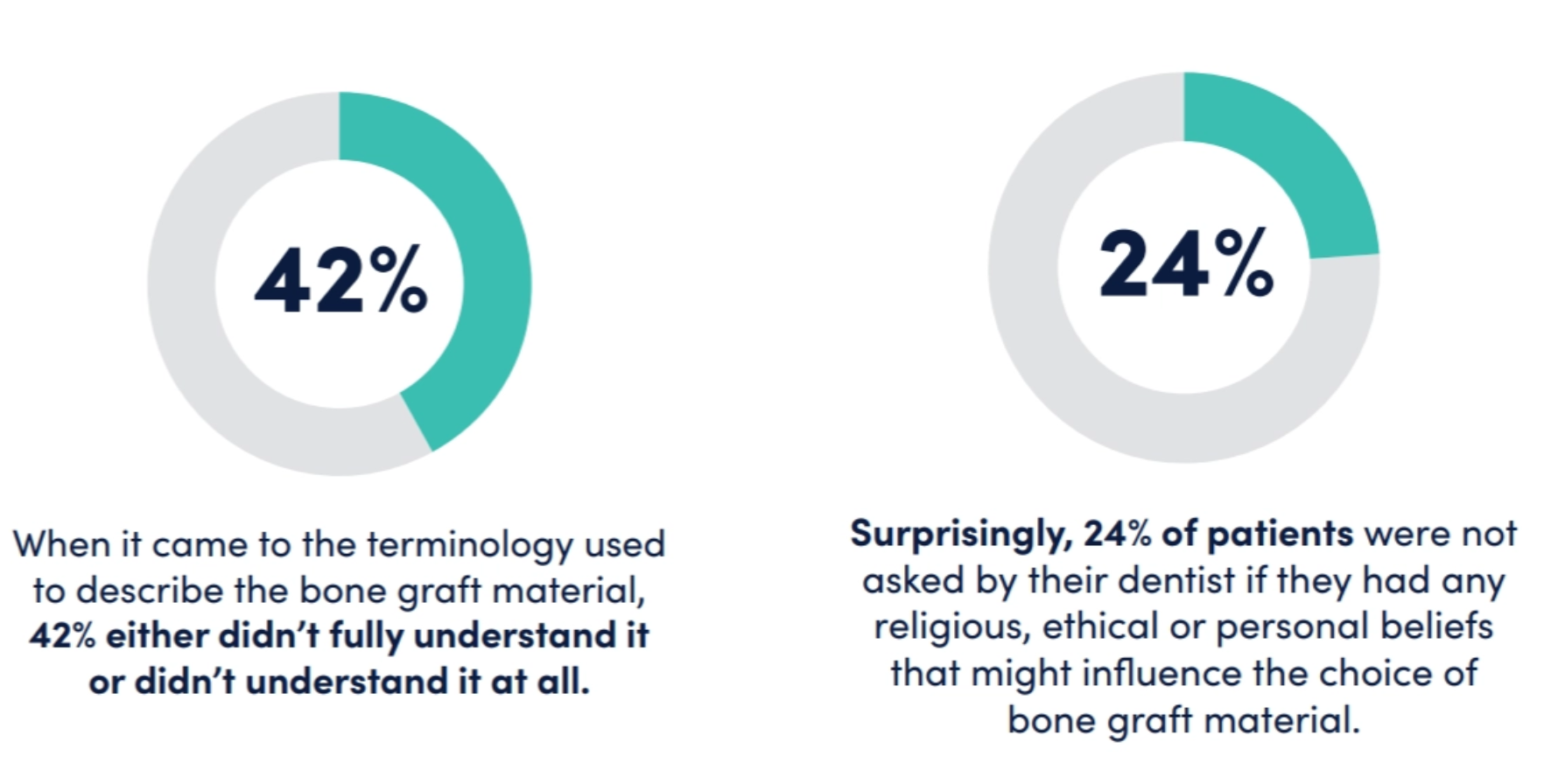
DentalGoodNews|A survey report titled "Bone Truths: What's Really In Your Smile?" recently commissioned by UK synthetic bone material manufacturer Ethoss Regeneration shows that only 37% of implant patients said their dentist had discussed the specific source of bone graft materials with them before surgery, meaning that for the remaining 63% of patients, they may have received animal-derived or human donor materials without being aware of it. The report notes that the discussion rate for this topic is even lower than that for healing time (55% had discussed it) and cost (41%), making it the least mentioned topic in doctor-patient communication. The survey report also exposes a dual gap in the informed consent process: 42% of respondents said they did not understand or completely did not understand the professional terminology for graft materials, with only 37% able to explain the meaning of "allograft" (human donor bone), and 35% able to explain the meaning of "xenograft" (animal-derived bone); 33% said they could not fully understand the informed consent form. More notably, 24% of respondents reported that their dentist had never asked before surgery whether their religion, ethics, or personal beliefs might affect material selection.
The report notes that if patients had been informed of the material source in advance, their choices might have been very different: 39% of respondents said they would request synthetic materials, the same proportion (39%) said they would ask whether alternatives exist, and 23% said they would directly refuse the use of animal or deceased human donor materials. When asked "what material would you ideally want to use," 40% of respondents preferred synthetic materials, 35% chose autogenous bone, 17% chose human donor bone, and only 14% chose animal-derived materials — yet animal-derived materials are precisely the option most commonly used by default in clinical practice. Patients' expectations for medical transparency are generally strong: 71% of respondents believe dentists have an obligation to proactively disclose material sources, 42% said they would file a complaint if they discovered afterward that it had not been disclosed, and 39% would seek legal advice. From a legal and regulatory perspective, the precedent established by the UK Supreme Court in 2015 in the case of "Montgomery v Lanarkshire Health Board" requires that clinicians must ensure patients are aware of all risks that are "material" to them, rather than being limited to risks that doctors themselves consider important; this standard also applies to informed consent for bone graft materials. In February 2026, the General Dental Council (GDC) mentioned in its official blog that patients had reported issues of dental materials containing animal-derived ingredients without being informed, and listed whether bone graft materials contain bovine-derived ingredients as a related concern. Bone Truths: What's Really In Your Smile? (Full survey report), Ethoss Regeneration, May 2025 How patient consent can help build trust and confidence, General Dental Council (GDC), February 24, 2026 Dental bone graft consent: are patients being told? (Interview with associate dentist Mariam Belattar), Dentistry.co.uk, September 28, 2026 RevBio launches pivotal clinical trial of novel bone adhesive, potentially eliminating bone graft surgery, March 18, 2025
【GOODNEWS】 Content for industry reference only (based on public info & professional judgment); not for decision-making. Readers bear full responsibility for their own judgment and risks.
Copyright © This Platform. Unauthorized reproduction & commercial use prohibited.
Errata, contributions & cooperation: Contact customer service via WeChat:HDSW_001
|
✉️
Subscribe to Our
Newsletter
We curate important stories and exclusive insights, delivered straight to your inbox.
In-depth analysis · Exclusive content · Fast-moving news
|