Harvard Team: Proposed U.S. Health Insurance Cuts Could Leave 480,000 Children Without Dental Coverage AnnuallyIssuing time:2026-06-22 15:11
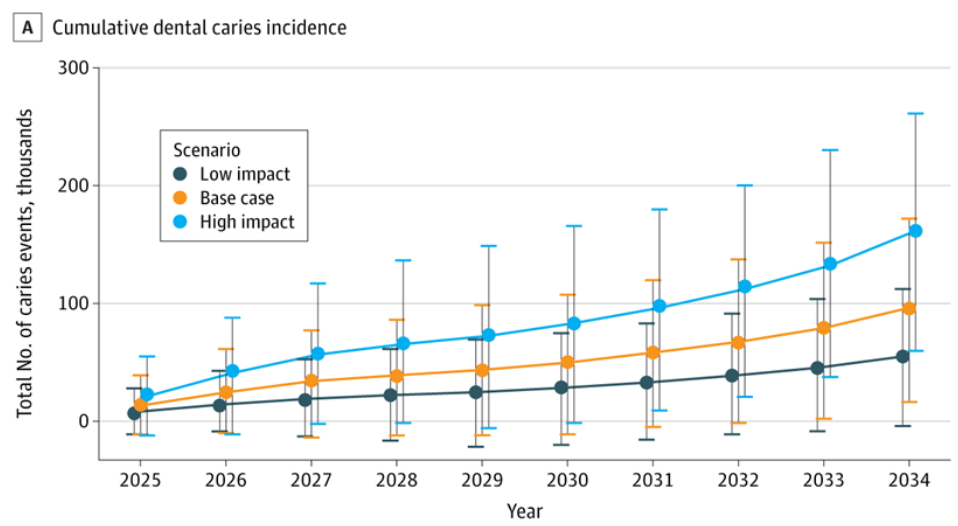
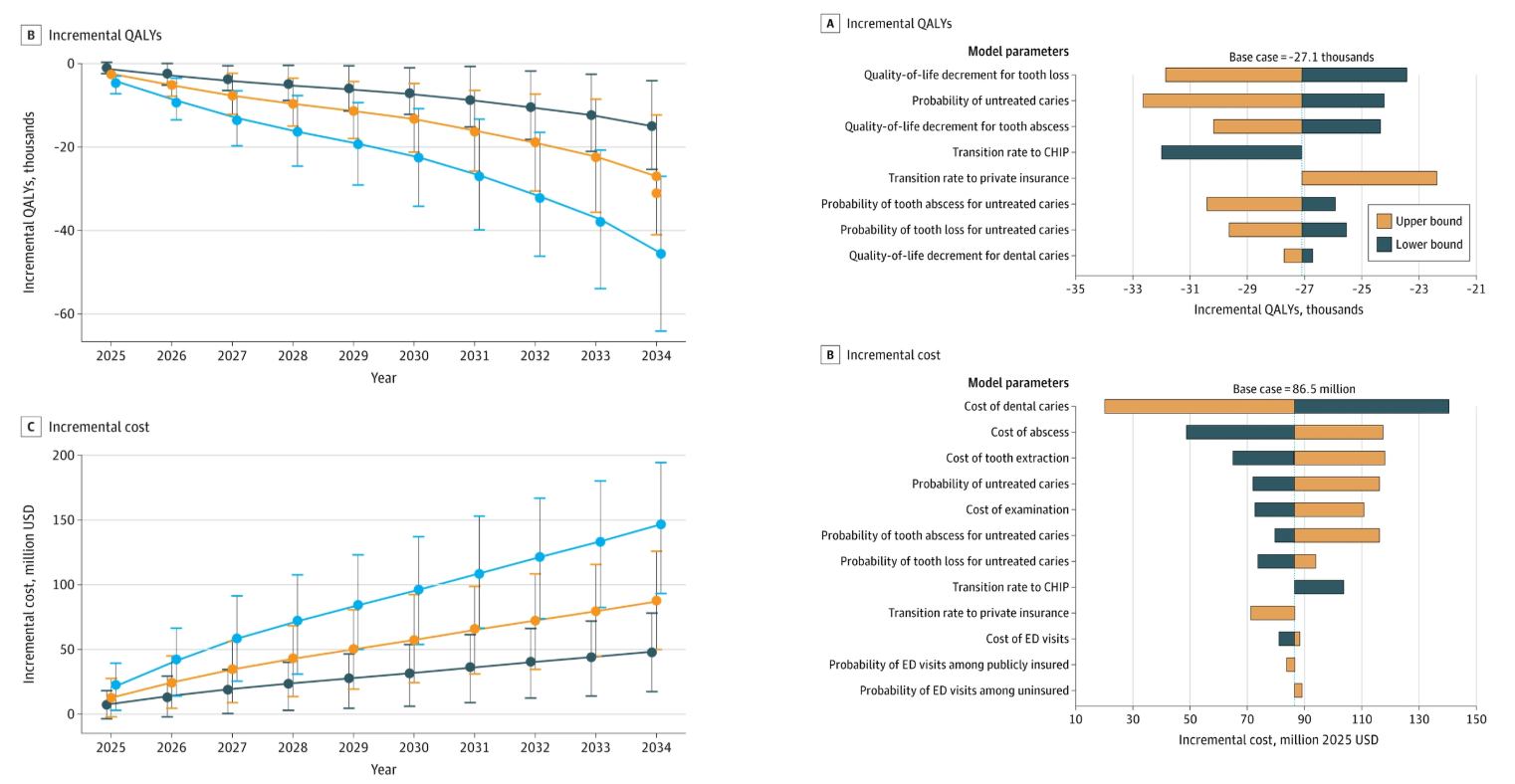
DentalGoodNews|A research team from Harvard School of Dental Medicine and other institutions recently published a study in JAMA Network Open indicating that under the policy scenario of the 2025 "One Big Beautiful Bill Act" (hereinafter referred to as "OBBBA"), it is estimated that approximately 480,000 children in the U.S. could lose Medicaid dental coverage annually. This is projected to increase the oral health burden and raise medical costs during the 2025-2034 period. The study, using a microsimulation model, predicts that over the ten-year period from 2025 to 2034, the reduction in Medicaid dental coverage is expected to result in an additional 95,799 new cases of dental caries nationwide, along with a loss of approximately 27,084 quality-adjusted life years (QALYs)*. From a healthcare system perspective, the estimated additional medical costs amount to approximately $86.5 million. Quality-Adjusted Life Year (QALY): An indicator in health economics that combines "how long you live" and "how healthy you live." One QALY is equivalent to living one year in perfect health.
Notably, the study's discussion section points out that the additional costs are more likely to manifest as a "reallocation" of costs within the healthcare system: after coverage interruptions, some children may delay or forgo preventive care, leading to increased emergency department (ED) visits, thereby raising overall system costs. The research team also emphasizes that Medicaid plays a critical role in ensuring access to oral healthcare services for low-income children, and coverage interruptions may increase the burden of untreated dental caries while shifting the economic burden to entities such as hospitals and families. The American Dental Association (ADA), in its related interpretation, cited the study and stated that the findings reinforce the importance of "maintaining comprehensive Medicaid dental coverage." According to previous reports by DENTALGOODNEWS (Leading Dental Industry Media, DGN), the pediatric dental Dental Service Organization (DSO) Lone Peak Dental Group once received approximately $15 million in funding to support its business expansion across 14 states, and disclosed that its primary service population includes children benefiting from Medicaid dental coverage and underserved communities. The Harvard team's study also suggests, from a public payment perspective, that the continuity of Medicaid dental coverage remains a key factor affecting oral healthcare accessibility for low-income children in the U.S.
【GOODNEWS】 Content for industry reference only (based on public info & professional judgment); not for decision-making. Readers bear full responsibility for their own judgment and risks.
Copyright © This Platform. Unauthorized reproduction & commercial use prohibited.
Errata, contributions & cooperation: Contact customer service via WeChat:HDSW_001
|
✉️
Subscribe to Our
Newsletter
We curate important stories and exclusive insights, delivered straight to your inbox.
In-depth analysis · Exclusive content · Fast-moving news
|