New Study: Sugarcane Protein Artificial Saliva May Protect Tooth Enamel in Cancer Radiotherapy PatientsIssuing time:2026-04-07 12:17
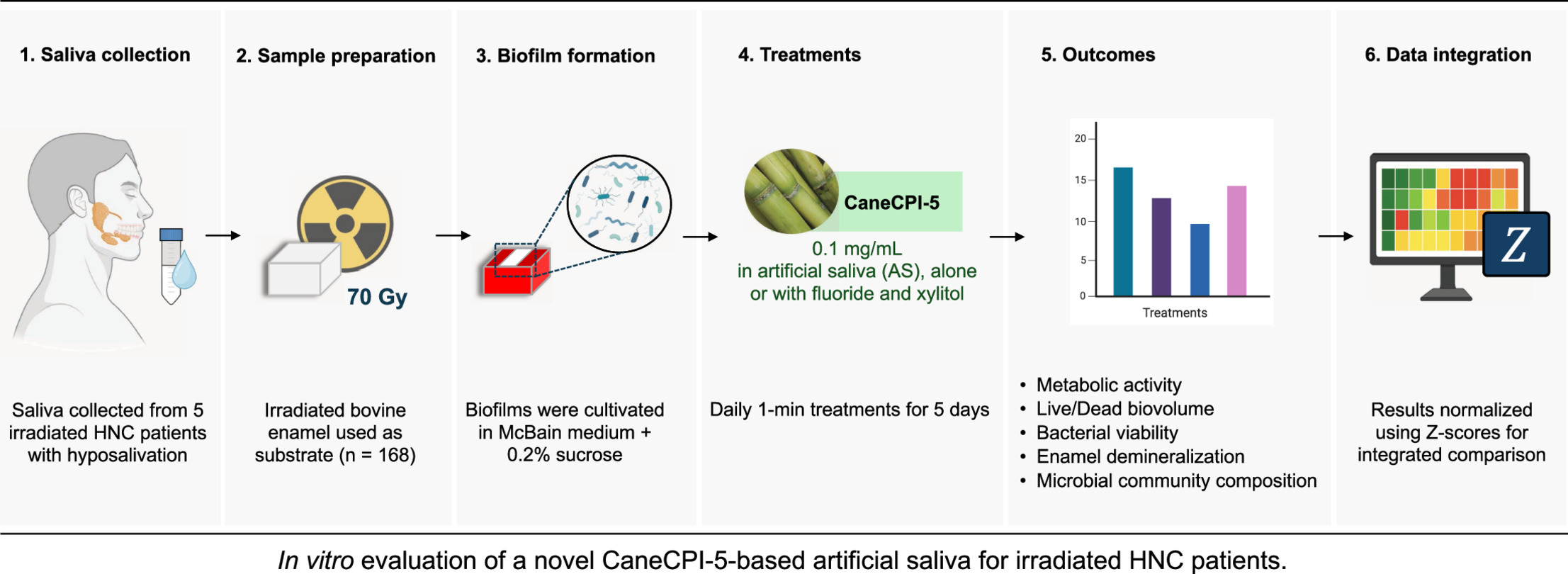
DentalGoodNews | An in vitro study recently published in the Journal of Dentistry by a research team from the University of São Paulo, Brazil, shows that a novel artificial saliva made from a laboratory-modified sugarcane protein, CaneCPI-5, can effectively protect head and neck cancer patients undergoing radiotherapy from acid and bacterial erosion, significantly reducing demineralization in an in vitro model. According to disclosed research data, over 890,000 head and neck cancer patients are affected globally each year. During radiotherapy, due to the radiation field's extreme proximity to the oral cavity, these patients often experience salivary gland hypofunction, leading to reduced saliva secretion (xerostomia). Saliva plays a crucial role in controlling oral bacteria and maintaining tissue health. Its absence not only predisposes patients to severe dental caries but also leads to oral infections and periodontal diseases, severely diminishing their quality of life. The research team discovered that the sugarcane protein CaneCPI-5 can directly bind to tooth enamel, forming a protective "shield" on the tooth surface. This process utilizes the concept of the "acquired pellicle," by reformulating the protein composition that binds to teeth, thereby enhancing enamel resistance to acidic substances such as fruit acids, alcohol, and gastric acid. The study's first author, Natara Dias Gomes da Silva, a PhD student at FOB-USP, explained that the team tested a mouthwash developed using CaneCPI-5. The experiment employed an in vitro model where irradiated bovine enamel samples were exposed to pooled saliva from head and neck cancer patients and a culture medium to form a biofilm. The results showed that the effect was most pronounced when CaneCPI-5 was used in combination with fluoride and xylitol. During the 5-day test period, this CaneCPI-5-enriched artificial saliva formulation effectively reduced the metabolic activity and bacterial viability of the biofilm and slowed mineral loss. Compared to the control group, this formulation not only effectively prevented tooth demineralization but also preserved the overall diversity of the oral microbiota, selectively enriching microbial taxa associated with health. The study's coordinator, Professor Marília Afonso Rabelo Buzalaf from the School of Dentistry at the University of São Paulo, Brazil, pointed out that this is the first product to apply the concept of acquired pellicle engineering for treating xerostomia. Currently, most saliva substitutes on the market only provide lubrication and short-term comfort, failing to effectively address the explosive tooth decay problem post-radiotherapy. This novel formulation holds promise as a low-cost and efficient tooth protection solution for vulnerable populations. According to the professor, the CaneCPI-5 protein is currently patented. The research team has conducted preliminary tests on various formulations such as mouthwash, gel, and orally disintegrating tablets, finding that the protein performs well in different carriers. The team's next focus will be exploring how to combine CaneCPI-5 with carriers like vitamin E to facilitate home use by patients. This research is an international collaborative project funded by the São Paulo Research Foundation (FAPESP) in Brazil. Participating institutions also include the Federal University of São Carlos (UFSCar) in Brazil, the University of California, San Francisco (UCSF) in the USA, and the School of Dentistry at Yonsei University in South Korea. The research team noted that the study is currently in the experimental stage and has not yet undergone large-scale clinical validation. As the research used an in vitro model based on bovine enamel, the conclusions cannot be directly extrapolated to human clinical applications. These findings require further human clinical trials to verify their safety and efficacy.
【GOODNEWS】 Content for industry reference only (based on public info & professional judgment); not for decision-making. Readers bear full responsibility for their own judgment and risks.
Copyright © This Platform. Unauthorized reproduction & commercial use prohibited.
Errata, contributions & cooperation: Contact customer service via WeChat:HDSW_001
|
✉️
Subscribe to Our
Newsletter
We curate important stories and exclusive insights, delivered straight to your inbox.
In-depth analysis · Exclusive content · Fast-moving news
|