West China Dental Study: Closer Parent-Child Relationship Correlates with Better Clear Aligner Therapy AdherenceIssuing time:2026-03-31 12:07
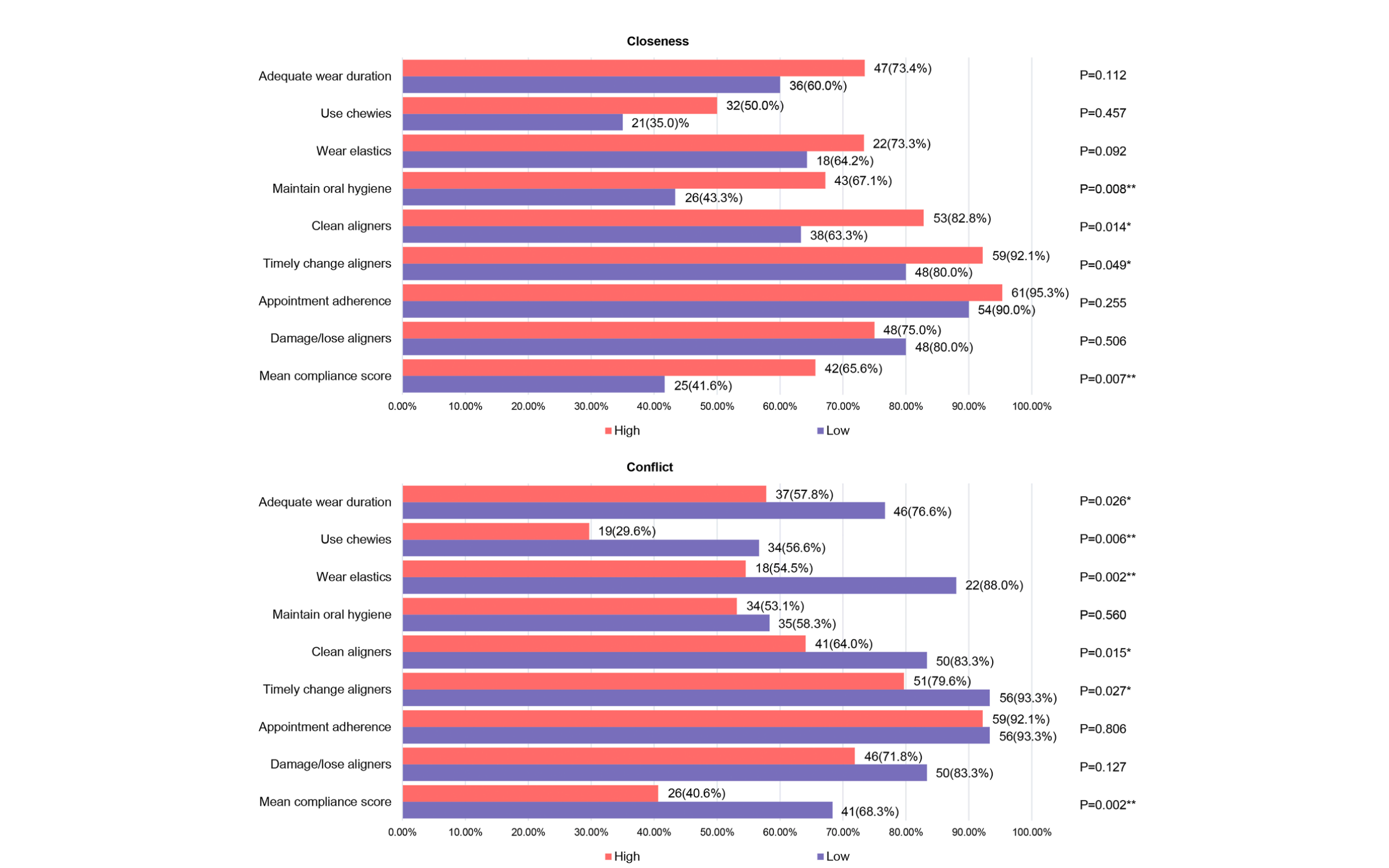
DentalGoodNews | A recent cross-sectional study (n=124) published in the American Journal of Orthodontics and Dentofacial Orthopedics (AJODO) indicates that the closeness and conflict levels within the parent-child relationship (PCR) are significant predictors of clear aligner therapy compliance among children and adolescents. This study was led by the Orthodontics Department team of West China Hospital of Stomatology, Sichuan University. It included 124 patients aged 6 to 18 undergoing clear aligner (CA) treatment. The parent-child relationship was quantitatively assessed using the Child-Parent Relationship Scale (CPRS), and compliance was evaluated across eight dimensions: wear time, use of chewies, elastic wear, oral hygiene maintenance, aligner cleaning, timely aligner change, appointment attendance, and aligner damage/loss.
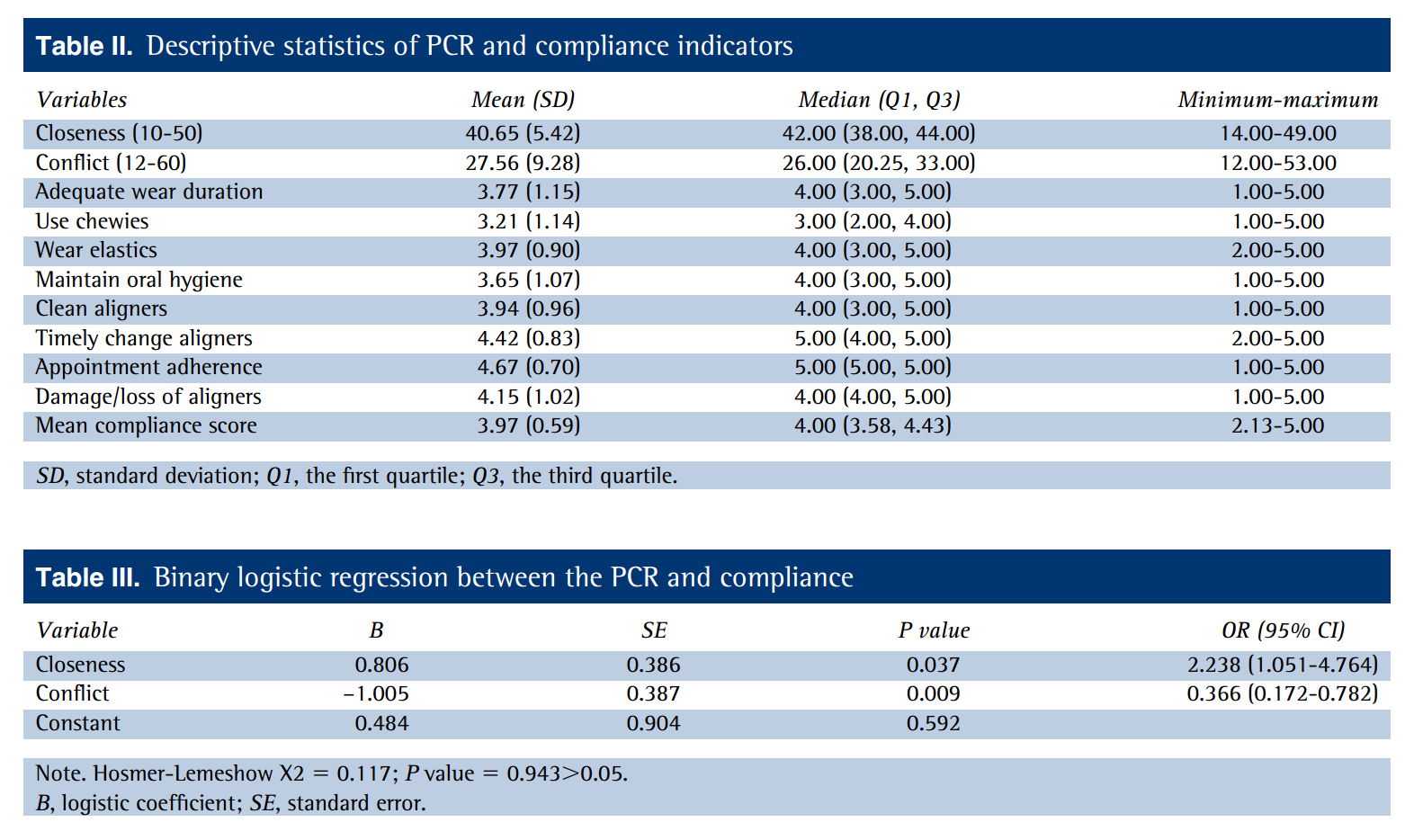
Statistical analysis revealed that high closeness in the parent-child relationship was positively correlated with the total clear aligner compliance score (P < 0.01). Specifically, patients with high closeness were 2.2 times more likely to achieve good overall compliance than those with low closeness (OR = 2.238). Conversely, in high-conflict parent-child relationships, patients were only 0.3 times as likely to achieve good compliance compared to the low-conflict group (OR = 0.366). Among the specific compliance indicators, appointment attendance (4.67±0.70) and timely aligner change (4.42±0.83) scored the highest. The use of chewies scored the lowest (3.21±1.14), identified as a weak point in compliance management. The study further found that the parent-child relationship was most closely associated with two specific behaviors: aligner cleaning and timely aligner change (P < 0.05). The study found no significant differences in clear aligner compliance based on various socio-demographic characteristics (e.g., gender, age, only-child status, family income). The team led by Li Peilin pointed out that assessing the parent-child relationship before treatment can provide orthodontists with important prognostic references, aiding in the development of personalized compliance management plans. The study notes that, being a single-institution cross-sectional study, PCR should be considered a supplementary predictor of compliance, not the sole determinant. Other factors, such as the relationship between the orthodontist and the patient, also play a role in treatment.
【GOODNEWS】 Content for industry reference only (based on public info & professional judgment); not for decision-making. Readers bear full responsibility for their own judgment and risks.
Copyright © This Platform. Unauthorized reproduction & commercial use prohibited.
Errata, contributions & cooperation: Contact customer service via WeChat:HDSW_001
|
✉️
Subscribe to Our
Newsletter
We curate important stories and exclusive insights, delivered straight to your inbox.
In-depth analysis · Exclusive content · Fast-moving news
|