German Research Team Receives Approximately 34.7 Million RMB in Funding to Advance Personalized Dental Implant DevelopmentIssuing time:2026-03-16 19:23
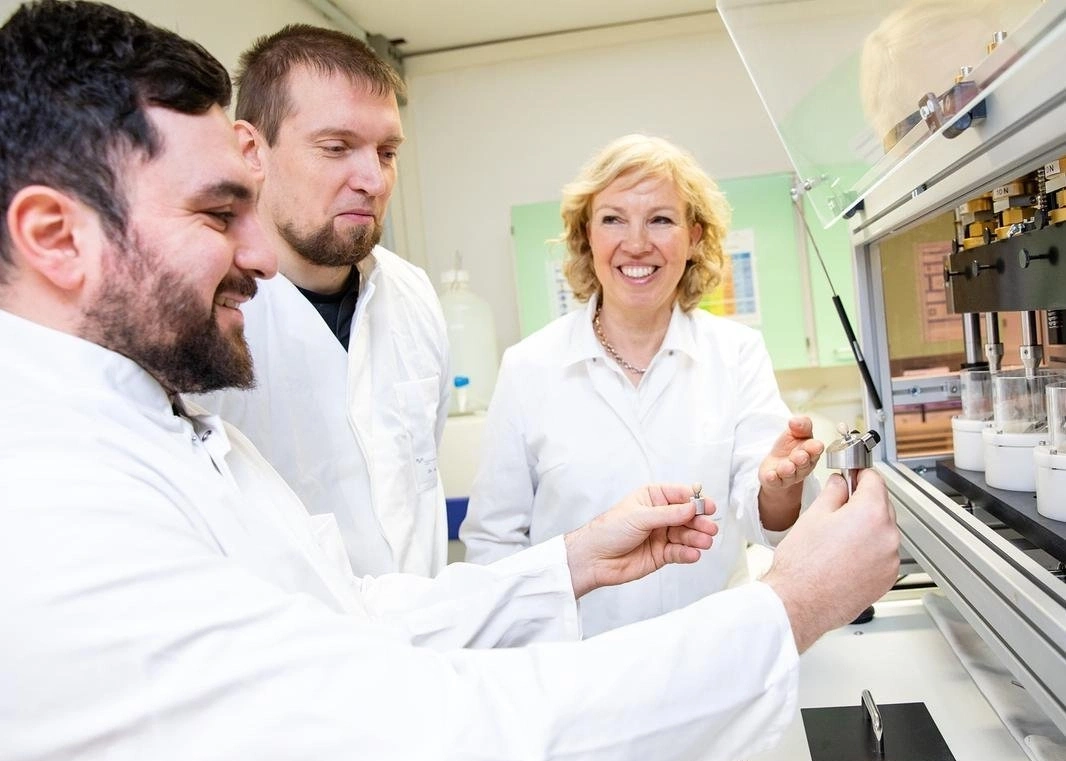
DentalGoodNews | Hannover Medical School (MHH) and its interdisciplinary research unit FOR 5250 recently announced the latest research progress in customized dental implant technology. This technology combines computer-aided modeling with metal 3D printing to develop personalized implants that match the patient's jawbone structure and biomechanical characteristics, aiming to optimize stress distribution and enhance long-term stability. According to the announcement, in December 2025, the German Research Foundation (DFG) officially approved the renewal of funding for the research network FOR 5250, with a grant of 4.4 million euros (approximately 34.7 million RMB) for an extended period of 4 years. This research network is jointly established by seven German academic institutions, including Hannover Medical School (MHH), with the core mission of developing personalized dental implants to reduce implant failure rates at the source. MHH pointed out in the announcement that common causes of dental implant failure include: degradation of surrounding bone tissue due to inflammation after implantation, uneven biomechanical stress distribution during the healing period, and insufficient bone mass in elderly patients. Existing clinical products are mostly standard specifications, making it difficult to adapt to the individualized jawbone conditions of patients. Therefore, the research and development path of FOR 5250 integrates medical and engineering technologies to customize implants for each patient, optimizing the distribution of masticatory loads according to their bone structure and inhibiting the colonization of pathogenic bacteria on the implant. In terms of production technology, the research team employs computer-aided simulation to predict the mechanical stress distribution at the implant-bone tissue interface before manufacturing, thereby designing the optimal internal structure. Subsequently, through Additive Manufacturing (AM) / 3D Printing, graded implants adapted to the individual jawbone conditions of the patient are printed layer by layer according to digital specifications, differing from the uniform specifications of existing standard components. Regarding surface treatment, the printed implants undergo mechanical sandblasting and chemical acid etching to promote the adhesion of bone-forming cells. The research team is also developing new coatings containing magnesium alloys, aiming to promote bone healing while utilizing their antibacterial properties to prevent bacterial attachment and biofilm formation. During the initial funding phase, FOR 5250 completed the development of the first-generation model of a modified standard implant. This renewal will drive the team to further expand the computational models to address the special needs of elderly patients—particularly jawbone instability caused by age-related bone loss. Professor Meike Stiesch, Head of the Clinical Department of Prosthetic Dentistry and Biomedical Materials Science at MHH, stated: "Implant-supported dentures are an ideal solution for reconstructing a functional dentition without affecting adjacent teeth. We hope to provide more patients with safe, durable, and tailor-made oral treatments." According to the announcement, the research team has already established connections with some medical technology companies. [SOURCE] → Hannover Medical School: MHH develops customized dental implants
Article classification:
Global Dental
【GOODNEWS】 Content for industry reference only (based on public info & professional judgment); not for decision-making. Readers bear full responsibility for their own judgment and risks.
Copyright © This Platform. Unauthorized reproduction & commercial use prohibited.
Errata, contributions & cooperation: Contact customer service via WeChat:HDSW_001
|
✉️
Subscribe to Our
Newsletter
We curate important stories and exclusive insights, delivered straight to your inbox.
In-depth analysis · Exclusive content · Fast-moving news
|