Using 3D Printing absorbable scaffolds to promote alveolar bone regeneration, with average bone gain volume reaching 112% of the planned defect.Issuing time:2026-11-12 11:42
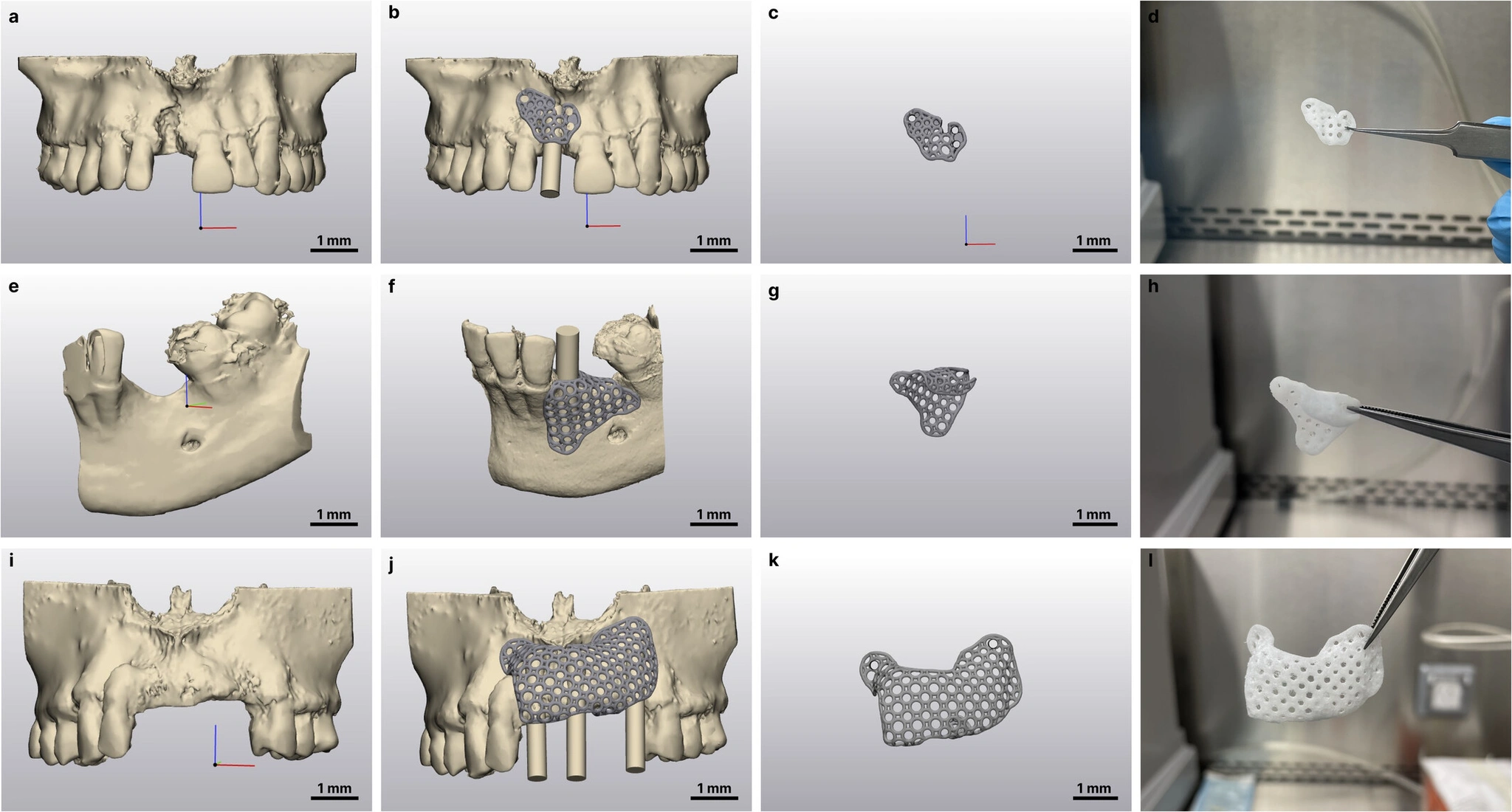
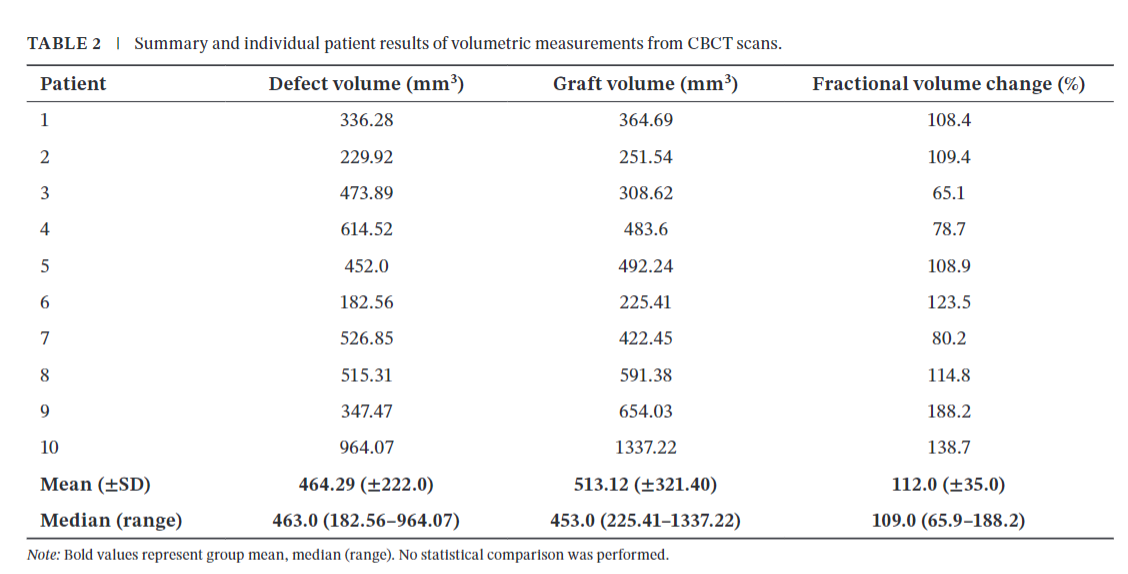
DentalGoodNews|A recent prospective cohort study published online in the Journal of Clinical Periodontology showed that after staged alveolar ridge augmentation using patient-specific 3D-printed absorbable polycaprolactone (PCL) scaffolds combined with composite bone grafts, the mean augmented bone volume in 10 patients was 513.1 ± 321.4 mm³, equivalent to 112.0% ± 35.0% of the initially planned defect volume. However, the study also found that scaffold fracture occurred at reoperation in 7 patients, and some patients still had insufficient bone augmentation. Because the study did not include a control group, it remains impossible to determine whether this approach is superior to other bone augmentation techniques. The study was conducted by Sašo Ivanovski and colleagues at the University of Queensland, Australia, and included 10 adult patients with insufficient alveolar ridge bone volume who required staged bone augmentation. Based on intraoral scanning (IOS) and Cone Beam Computed Tomography (CBCT) data, the researchers performed prosthetically driven implant placement design, virtually reconstructed the ideal alveolar ridge contour, and manufactured patient-specific medical-grade PCL scaffolds accordingly. During surgery, autogenous bone and deproteinized bovine bone mineral were mixed at a 1:1 ratio, injectable platelet-rich fibrin (iPRF) was added, and the mixture was loaded into the scaffold, which was fixed to the recipient site with fixation screws and finally covered with an absorbable collagen membrane. CBCT measurements showed a mean postoperative augmented bone volume of 513.1 mm³, a mean buccal horizontal bone gain of 2.2 mm, and a mean vertical bone gain of 4.7 mm. However, bone augmentation differed across anatomical locations: at the buccal alveolar crest, a mean residual bone deficiency of 2.3 mm remained, and the mean residual vertical deficiency was 1.5 mm.
At reoperation, PCL scaffold fracture occurred in 7 of the 10 patients, of whom 3 also showed partial graft integration, with non-mineralized soft tissue observed on the graft surface. The augmented bone volumes in these 3 patients reached 65.1%, 78.7%, and 80.2% of the initially planned defect volume, respectively, and these were also the cases with the lowest augmentation ratios in the study. The researchers noted that these cases involved more complex three-dimensional bone defects, but a causal relationship between scaffold fracture and insufficient graft integration cannot currently be determined. Regarding implant restoration, a total of 13 Dental Implants were placed in the 10 patients, all achieving primary stability. Five patients received additional bone augmentation at the time of implant placement. Most patients underwent implant surgery approximately 6 months after bone augmentation; another patient experienced wound dehiscence, had scaffold remnants removed at reoperation 6 months postoperatively, and received implants only after waiting an additional 3 months for soft tissue healing. One case of transient paresthesia was also recorded after bone augmentation, and no signs of infection were found in the wound dehiscence case. The researchers concluded that patient-specific PCL scaffolds hold promise for staged bone augmentation of complex alveolar ridge defects and support further randomized controlled studies. However, the study sample included only 10 cases, lacked a control group, and did not objectively measure regenerated bone quality or implant stability. Therefore, the current results are insufficient to prove that the augmentation effect is attributable to the PCL scaffold itself, nor can they be used to determine its clinical advantage over existing techniques such as titanium mesh.
Article classification:
Stomatology
【GOODNEWS】 Content for industry reference only (based on public info & professional judgment); not for decision-making. Readers bear full responsibility for their own judgment and risks.
Copyright © This Platform. Unauthorized reproduction & commercial use prohibited.
Errata, contributions & cooperation: Contact customer service via WeChat:HDSW_001
|
✉️
Subscribe to Our
Newsletter
We curate important stories and exclusive insights, delivered straight to your inbox.
In-depth analysis · Exclusive content · Fast-moving news
|