New Research: AI Identifies Teeth and Dental Caries, with 99.8% Accuracy in Tooth Counting and Over 90% Precision in Caries Detection.Issuing time:2026-09-01 12:02
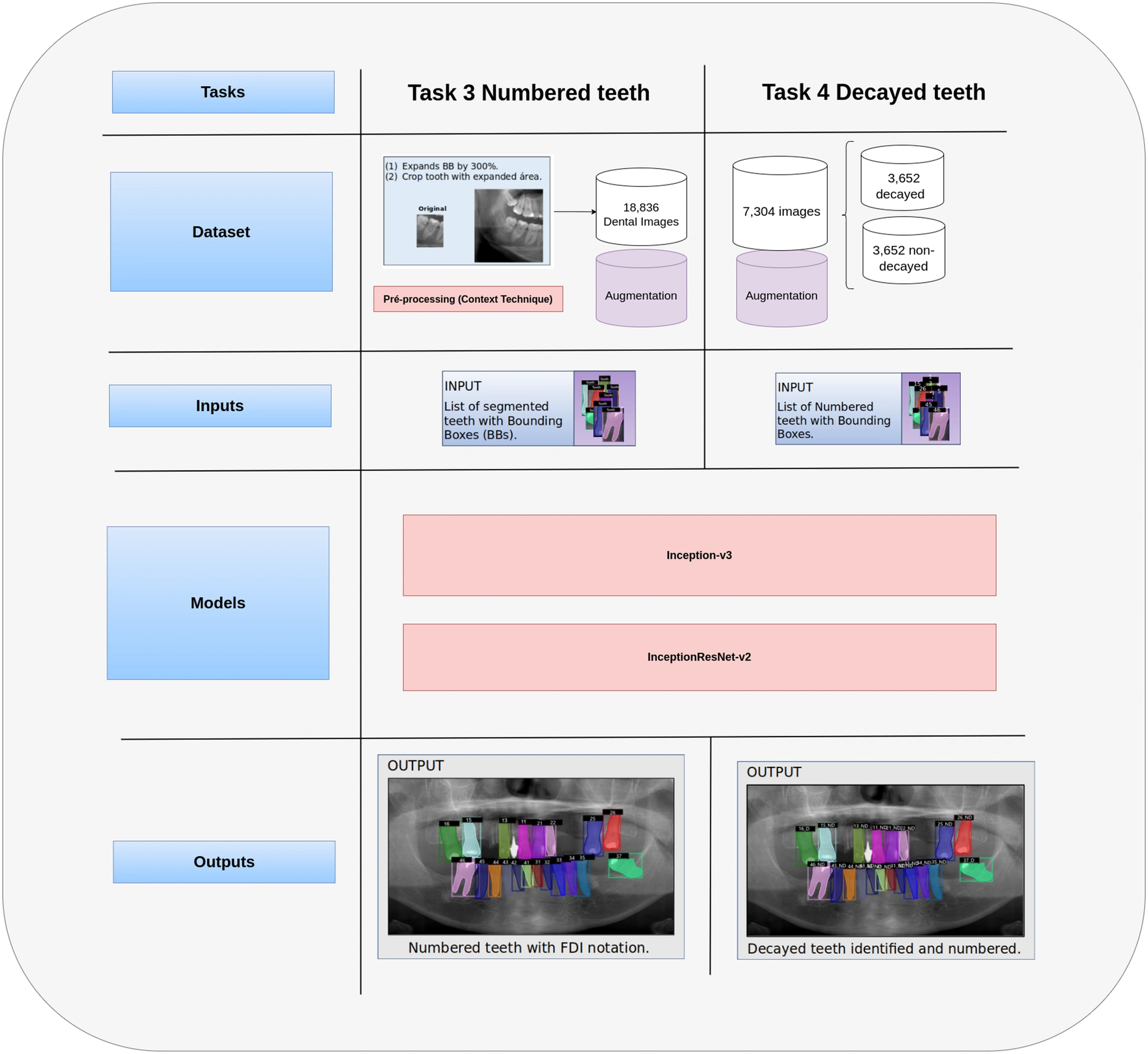
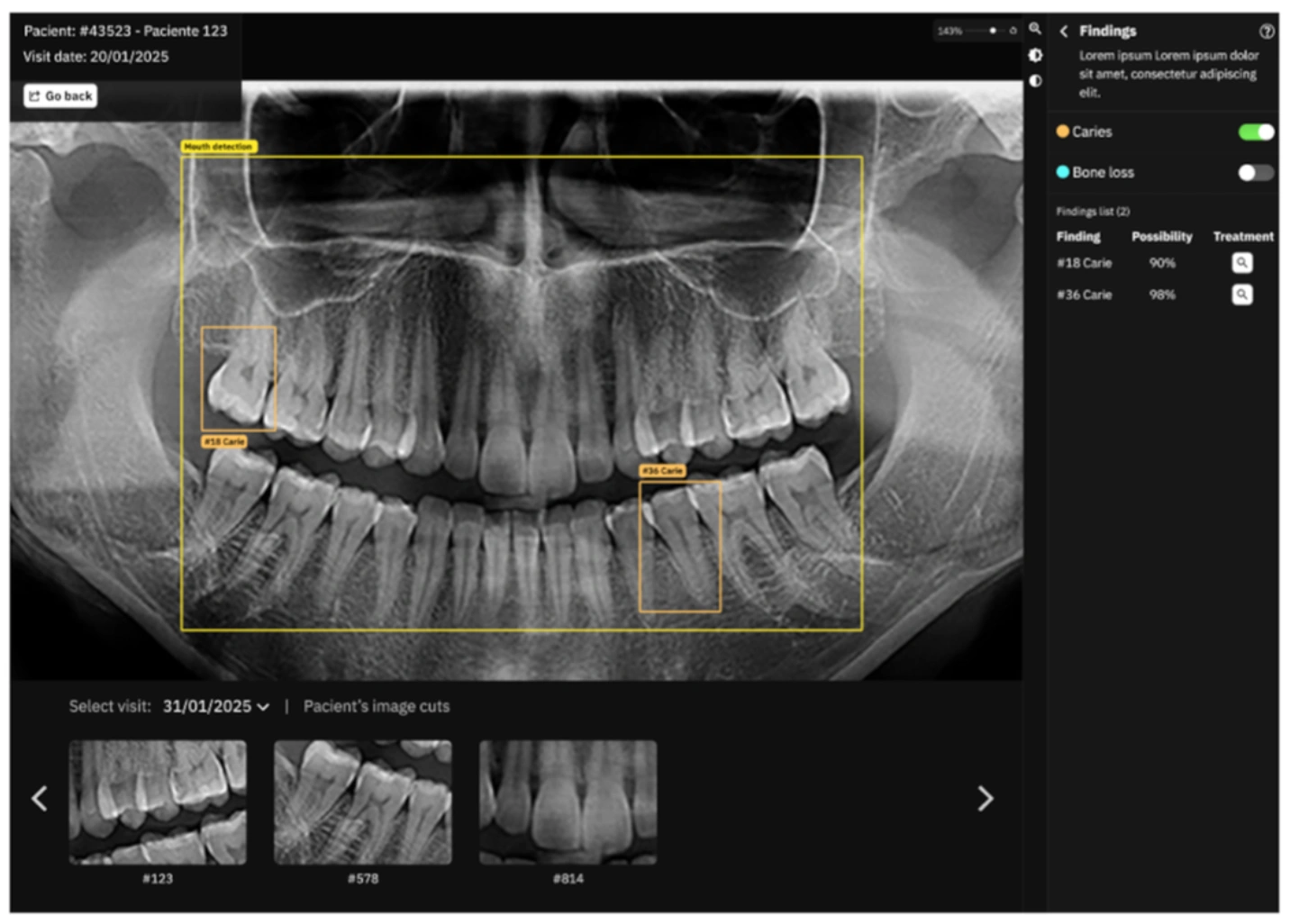
DentalGoodNews|A recent study (n=935) based on convolutional neural networks (CNN), published in "PLOS Digital Health", shows that an AI system developed by an interdisciplinary team at the University of São Paulo's Ribeirão Preto campus (USP Ribeirão Preto) demonstrates high accuracy in tooth counting and dental caries detection on dental panoramic radiographs. The system aims to reduce the workload of dental practitioners through automated image analysis and lower the risk of misdiagnosis caused by fatigue or insufficient experience. The research team comprises computer science experts from the Faculty of Philosophy, Sciences and Languages (FFCLRP) and oral medicine specialists from the Ribeirão Preto School of Dentistry (FORP) at the University of São Paulo. The team constructed a "ground truth" dataset by having 935 routine clinical panoramic radiographs (PANs) annotated at expert level, and compared the performance of two CNN architectures: Inception-v3 and InceptionResNet-v2. In practical testing, the system achieved a precision of 0.98 and an accuracy of 0.998 for tooth counting (following the World Dental Federation (FDI) notation system). For dental caries detection, the system achieved a precision of 0.96, a recall of 0.91, and an F1 score of 0.94. The researchers noted that CNNs excel at extracting hierarchical features from raw pixels, enabling them to perceive subtle grayscale variations that are difficult for the human eye to discern, thus performing exceptionally well on dental images with complex textures. According to previous reports by DENTALGOODNEWS (Leading Dental Industry Media, DGN), the application of artificial intelligence in medical imaging also comes with safety challenges. Earlier research from the Icahn School of Medicine at Mount Sinai warned that AI-generated "deepfake" radiographs could deceive radiologists, with recognition accuracy dropping to as low as 41%. In contrast, the USP team's study focuses more on clinical auxiliary diagnosis. The system can also assist with administrative tasks, appointment management, and treatment planning, providing dentists with a "second opinion."
Despite its excellent performance, the research team emphasized that current AI models still possess "black box" characteristics, and their internal decision-making pathways cannot be fully explained. Due to the risk of AI system misjudgment, the ultimate responsibility for diagnosis remains with professional dental practitioners. Professor Camila Tirapelli stated that the quality of AI learning directly depends on the quality of training data, and close collaboration between medical and computing professionals is key to developing accurate models. Currently, the technology has received funding from the São Paulo Research Foundation (Fapesp) and has completed code copyright registration at USP. The research team believes that this tool will accelerate large-scale oral epidemiology studies and facilitate broader application in clinical practice. The study has certain limitations: the current model remains at the experimental stage, and the relevant conclusions require further large-scale multicenter validation; although accuracy is relatively high, the model's generalizability across different radiographic equipment still requires ongoing observation. The research is currently in the experimental phase, and human clinical validation has not yet been conducted.
Article classification:
Stomatology
【GOODNEWS】 Content for industry reference only (based on public info & professional judgment); not for decision-making. Readers bear full responsibility for their own judgment and risks.
Copyright © This Platform. Unauthorized reproduction & commercial use prohibited.
Errata, contributions & cooperation: Contact customer service via WeChat:HDSW_001
|
✉️
Subscribe to Our
Newsletter
We curate important stories and exclusive insights, delivered straight to your inbox.
In-depth analysis · Exclusive content · Fast-moving news
|