Mayo Clinic Accused of Covering Up 67% Error Rate of AI Assistant MAYA, Former AI Compliance Officer Fired After ReportingIssuing time:2026-07-14 18:04
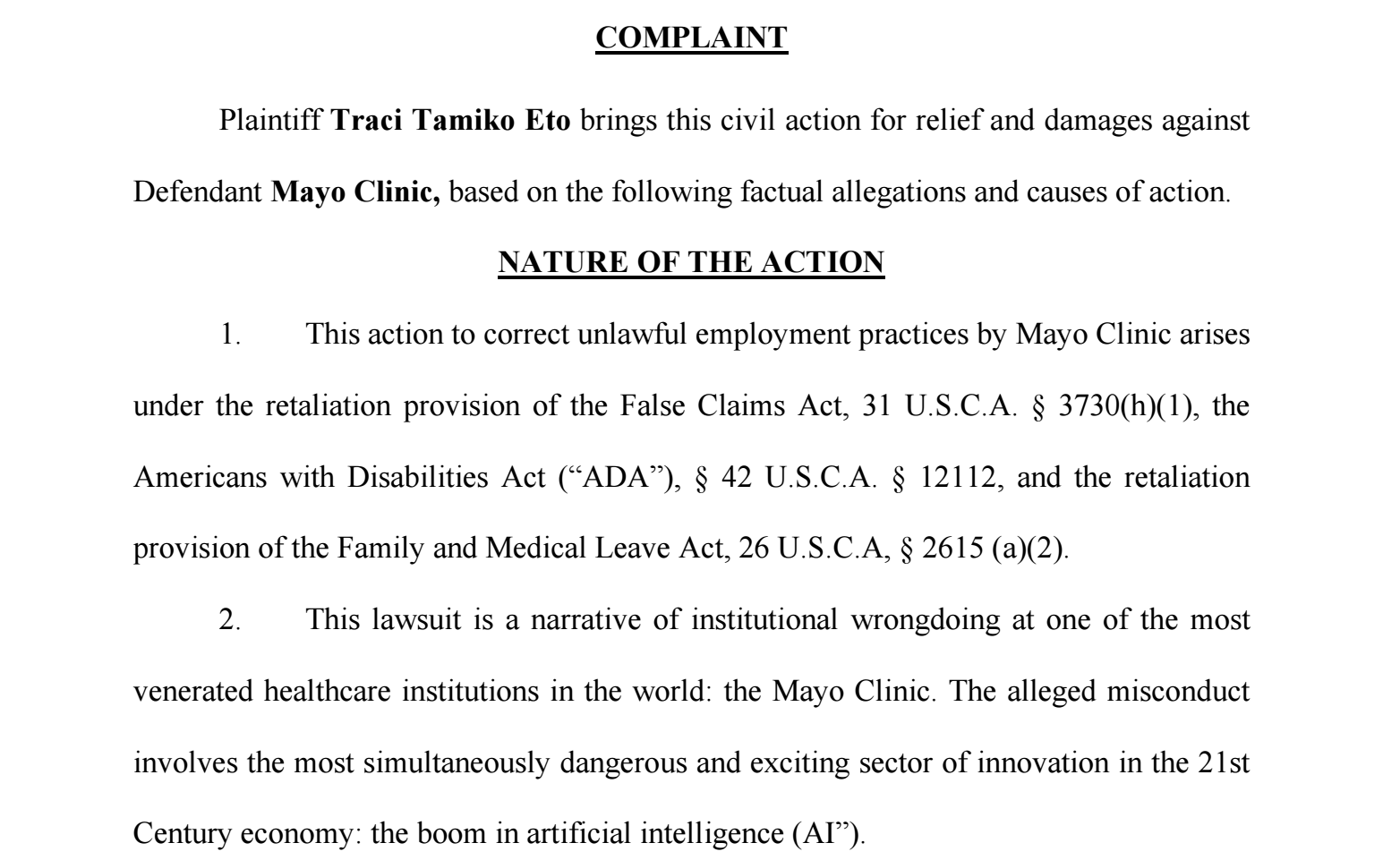
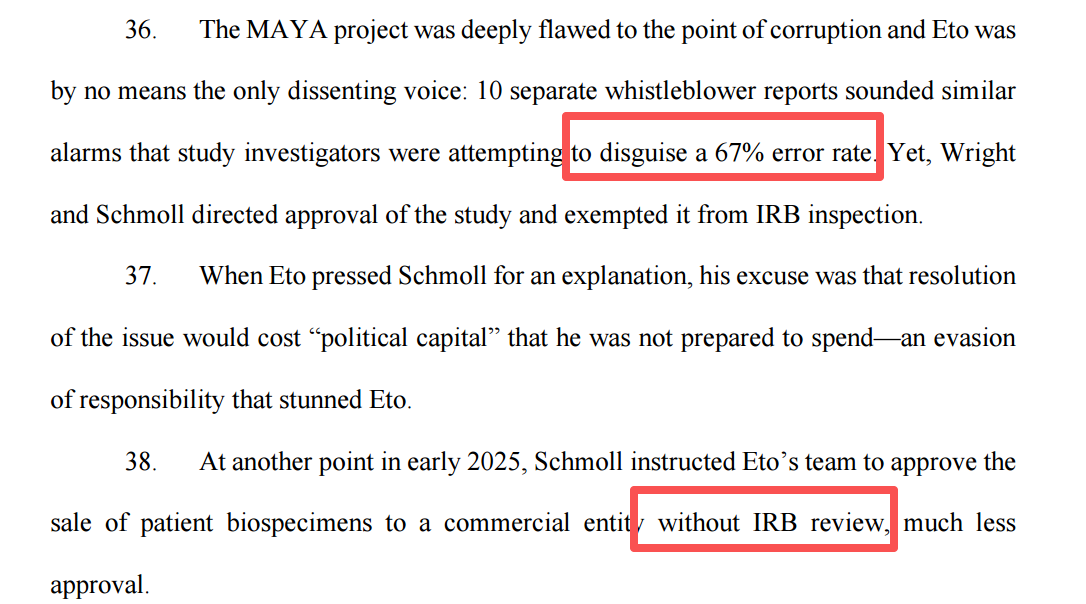
DentalGoodNews|On July 6, 2026, Traci Tamiko Eto, former Director of Research Operations at Mayo Clinic and responsible for certain AI compliance work, filed a lawsuit in the U.S. District Court for the District of Minnesota (Case No. 0:26-cv-03189-LMP-DTS), alleging that Mayo Clinic repeatedly bypassed federally mandated institutional review procedures while advancing AI and human research projects, and retaliated against her after she reported related issues, ultimately terminating her employment. A core allegation in the complaint targets Mayo's AI digital assistant "MAYA." The complaint alleges that the research team for this tool misrepresented study results, deleted unfavorable data, and deployed a software medical device (SaMD) without regulatory authorization, integrating it into the daily clinical workflow with which MAYA interacted. The complaint further alleges that 10 separate whistleblower reports raised similar warnings, claiming researchers attempted to conceal the tool's 67% error rate; however, Scott Wright and Jeffrey Schmoll still directed approval of the study and exempted it from IRB review. According to the complaint, when pressed, Schmoll explained that resolving the issue would require "political capital" he was unwilling to spend. MAYA is not the only compliance issue cited in the complaint. According to the complaint, as early as late spring or early summer 2024, Eto discovered that certain de-identification processes within the Mayo Clinic Platform (MCP), involving the sharing of patient data with global service providers, appeared to have bypassed proper IRB review procedures. Wright did not deny the substance of her concerns but stated that resubmitting for review would delay ongoing projects, thereby harming Mayo's "competitive advantage." In July of the same year, Wright also overrode Eto's objections and issued an approval letter authorizing the use of a high-risk experimental medical device in a cardiac surgery procedure, which had not previously undergone IRB review and, according to the complaint, was not licensed in the foreign country where it was to be performed.
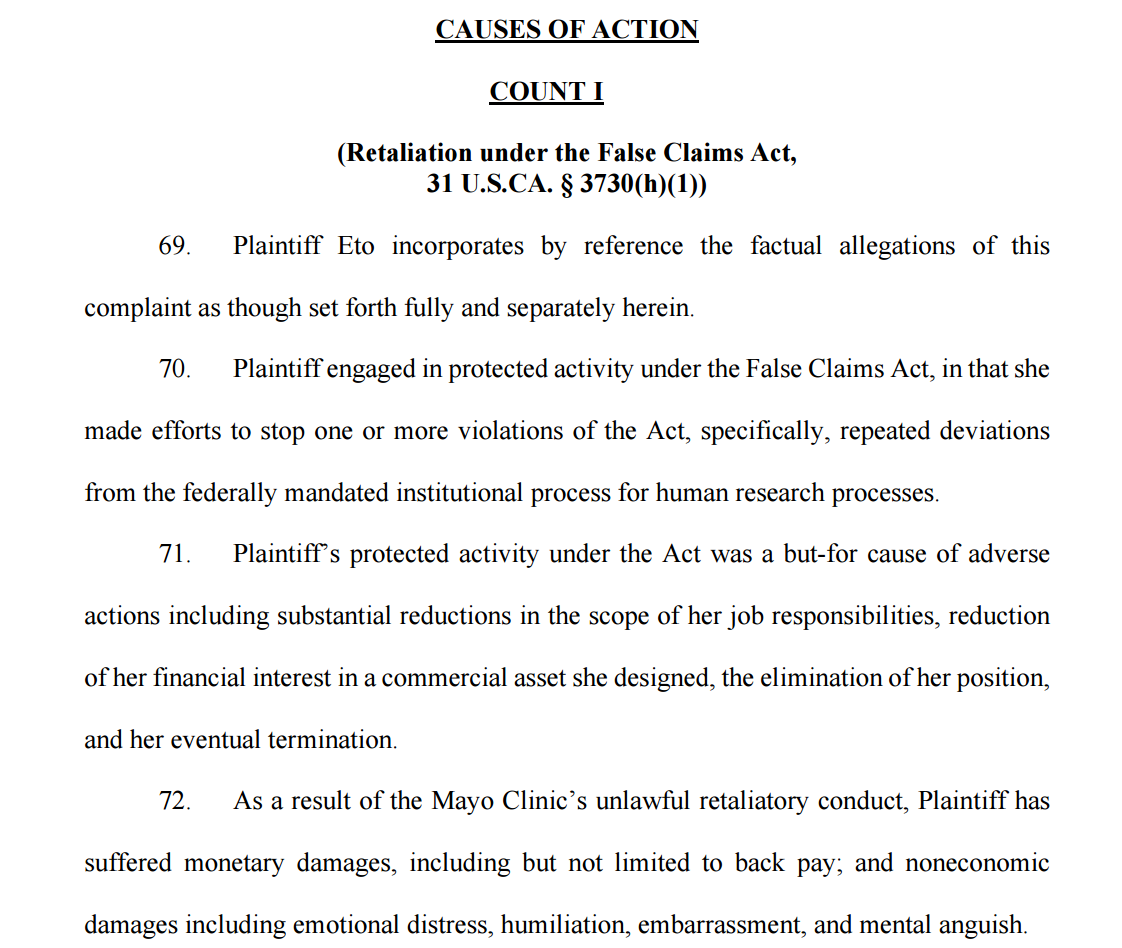
The complaint alleges that whistleblowing subsequently triggered retaliation. In February 2025, Eto submitted a written report to Mayo's legal department regarding the MAYA study issues and the cardiac surgery procedure lacking IRB review. Within days of Wright and Schmoll learning of the report, she began being excluded from executive-level meetings of the human research operations leadership team. In early March 2025, an AI engineering director warned her that Wright had issued an order to "get rid of Tamiko as soon as possible." On March 28, 2025, Schmoll told her that she could either resign from her research director position and he would help her find another role within Mayo, or face a record in her personnel file that would make it difficult for her to continue working at Mayo and affect her external career development. Eto had just received a raise of approximately $7,000 on March 12, increasing her annual salary to about $166,000—only two weeks later, on April 23, she received a formal performance improvement plan. The complaint alleges that Schmoll had previously evaluated her performance only as a "poor cultural fit," failing to identify any specific work errors. After the performance improvement plan was implemented, Eto's situation continued to deteriorate. In July 2025, after being stripped of her team management responsibilities, she experienced a severe depressive episode and applied for medical leave under the Family and Medical Leave Act (FMLA). The complaint alleges that Mayo initially denied her request, only approving leave from July 31 to October 22 after her retained attorney sent a letter indicating potential legal action. Before her leave ended, Mayo notified her on September 2, 2025, that her position would be eliminated due to workforce reduction; the complaint alleges that her position was the only one eliminated in this adjustment. Over the following 90 days, she applied for 15 internal positions but received only one interview. On December 1, 2025, Eto's employment was formally terminated.
The complaint asserts four causes of action under three federal laws: a retaliation claim under the False Claims Act (31 U.S.C. § 3730(h)(1)), a discrimination claim under the Americans with Disabilities Act (ADA), and retaliation and interference claims under the Family and Medical Leave Act (FMLA). The applicability of the False Claims Act centers on the financial relationship between Mayo and the federal government. The complaint alleges that Mayo Clinic's 2025 revenue was approximately $21.5 billion, with total research funding of about $1 billion, of which approximately $498 million came from federal and state governments. Based on information available to her, the plaintiff believes that approximately 12% of AI-related human research used federal grants, each of which carries certification requirements to comply with federal standards for human research protections, patient privacy, and IRB procedures. Mayo Clinic responded by stating its commitment to the responsible development and deployment of AI, noting that privacy, security, transparency, and compliance are embedded in relevant processes, and that research and clinical innovations are conducted in accordance with applicable laws and regulations. Regarding the case, Mayo stated it does not comment on pending or ongoing litigation. Shortly before the lawsuit was filed, Mayo Clinic also announced a collaboration with Microsoft to jointly develop advanced AI models for the healthcare field. As of now, the above matters are allegations raised by the plaintiff in the complaint. Mayo Clinic has not yet made a substantive response to the specific allegations, and the case has not entered the fact-finding stage in court.
Article classification:
Global Dental
【GOODNEWS】 Content for industry reference only (based on public info & professional judgment); not for decision-making. Readers bear full responsibility for their own judgment and risks.
Copyright © This Platform. Unauthorized reproduction & commercial use prohibited.
Errata, contributions & cooperation: Contact customer service via WeChat:HDSW_001
|
✉️
Subscribe to Our
Newsletter
We curate important stories and exclusive insights, delivered straight to your inbox.
In-depth analysis · Exclusive content · Fast-moving news
|