Global Survey: Limited Adoption of Immersive Technologies in Dental Education, Only 10% of Dental Postgraduates Use Haptic VRIssuing time:2026-04-15 17:40
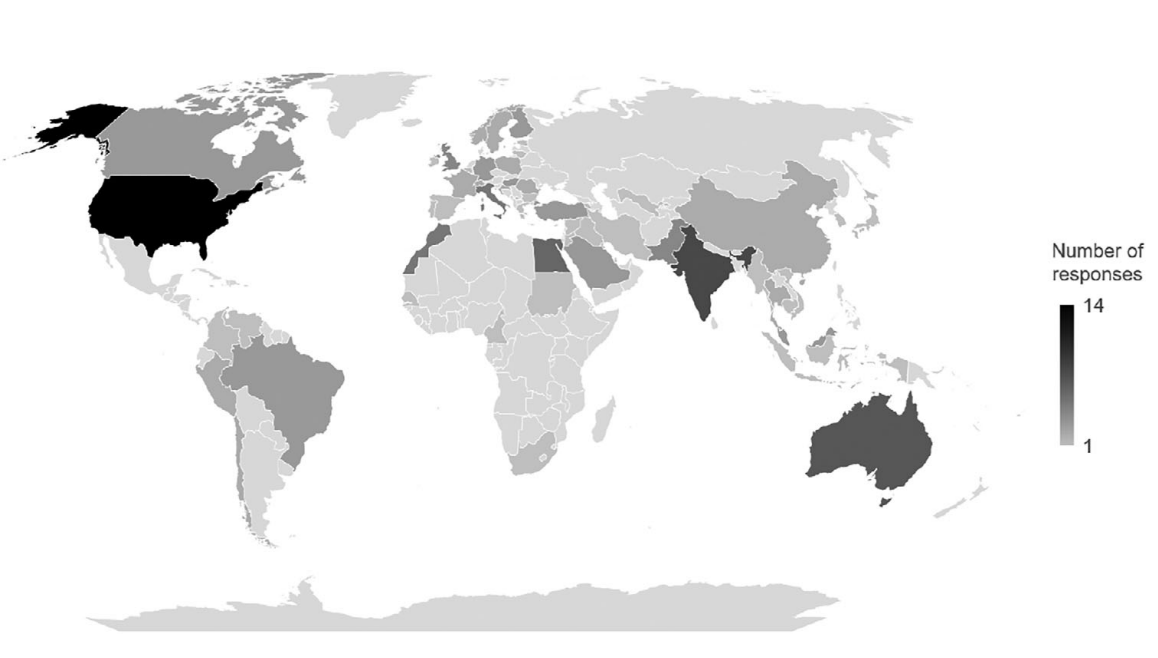
DentalGoodNews|April 11, 2026. A global cross-sectional survey (n=130), jointly completed by a research team from 28 institutions including the University of Liverpool and the University of Hong Kong and published in the Journal of Dental Education, reveals that traditional simulation methods still account for approximately 80% of dental clinical training time. The utilization rate of haptic virtual reality (HVR) in postgraduate institutions is only 10%, with resource scarcity being the primary obstacle to its wider adoption. The survey was conducted from July to August 2025, covering 115 institutions across 57 countries. Data shows that traditional methods such as phantom heads (n=118) and benchtop exercises (n=84) dominate preclinical training. HVR is used in 42 institutions, and mixed reality (MR) in 14 institutions, with both primarily concentrated at the undergraduate level. The HVR utilization rate at the postgraduate level is only 10%.
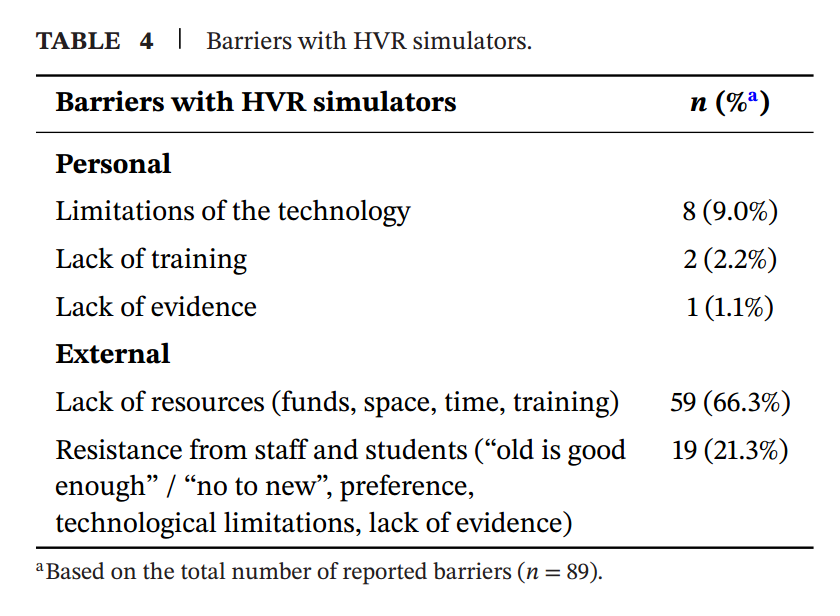
Among the 89 respondents who provided feedback on implementation barriers, resource scarcity (funding, infrastructure, etc.) accounted for 66.3%, faculty/student resistance for 21.3%, technological limitations for 9.0%, lack of relevant training for 2.2%, and lack of evidence support for 1.1%. The researchers point out that attitudinal barriers have become secondary factors, with external constraints being the fundamental reason for insufficient adoption. The survey also reveals equity gaps at the international level: institutions in high-income countries use HVR significantly more frequently at the undergraduate level than those in low-income countries (p=0.002). The researchers note that if this gap continues to widen, it will create a structural disparity in global dental clinical preparedness, particularly affecting the ability of graduates from less developed countries to enter digital clinical environments. According to a previous report by DGN, a 2024 study found that integrating VR into dental curricula can enhance learning outcomes. However, this global survey indicates that a significant gap remains before large-scale practical implementation is achieved. The researchers recommend that educational institutions, academic organizations, and policymakers collaborate to develop sustainable promotion pathways from dimensions such as procurement strategies, curriculum integration, and digital equity. This study employed a cross-sectional survey design, which cannot confirm causal relationships. The researchers also noted in the paper that the voluntary participation sample may affect the representativeness of the results, and related conclusions require validation through larger-scale, multi-center studies. The study was published in the April 2026 issue of the Journal of Dental Education, which is published by the American Dental Education Association (ADEA).
Article classification:
Stomatology
【GOODNEWS】 Content for industry reference only (based on public info & professional judgment); not for decision-making. Readers bear full responsibility for their own judgment and risks.
Copyright © This Platform. Unauthorized reproduction & commercial use prohibited.
Errata, contributions & cooperation: Contact customer service via WeChat:HDSW_001
|
✉️
Subscribe to Our
Newsletter
We curate important stories and exclusive insights, delivered straight to your inbox.
In-depth analysis · Exclusive content · Fast-moving news
|