New Study: Gum Disease-Related Bacteria May Accelerate Breast Tumor DevelopmentIssuing time:2026-03-24 12:01
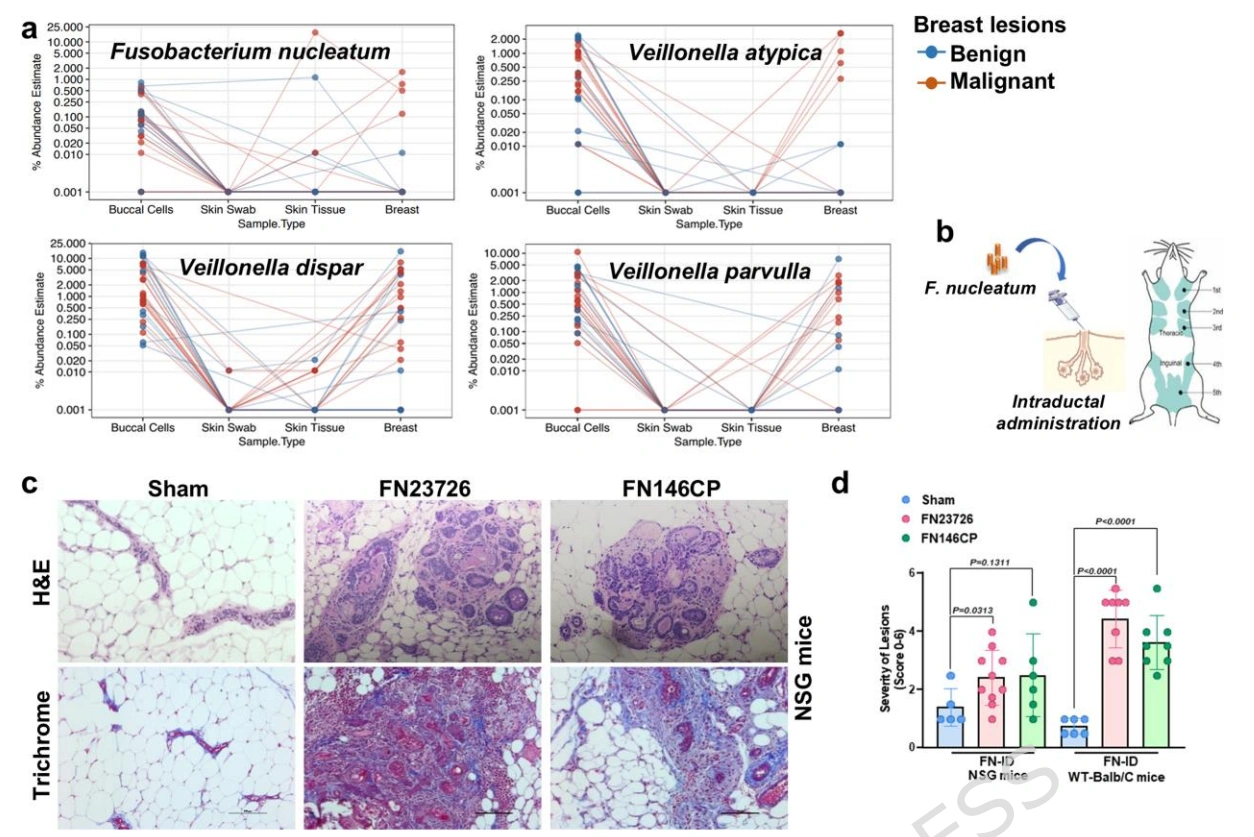
DentalGoodNews | A study published in Cell Communication and Signaling on March 19, 2026, reveals that Fusobacterium nucleatum, commonly associated with gum disease, may enter breast tissue via the bloodstream and promote or accelerate mammary tumorigenesis by triggering inflammation and early cellular changes. The research, conducted by the Johns Hopkins Kimmel Cancer Center and the Bloomberg Kimmel Institute for Cancer Immunotherapy, found that in animal models of human breast cancer, the presence of F. nucleatum accelerated tumor growth and increased the risk of cancer cells metastasizing to the lungs. Experiments showed that when the bacteria were directly introduced into mammary ducts, they caused non-cancerous lesions such as metaplasia or hyperplasia in epithelial cells, accompanied by significant increases in DNA damage and cell proliferation levels. The research team delved into the underlying biological mechanisms. The results indicate that exposure to F. nucleatum activates an intracellular DNA repair system called non-homologous end joining (NHEJ). While this system can rapidly repair broken DNA, it is prone to introducing genetic mutations. Furthermore, bacterial infection also elevates levels of the PKcs protein, which is closely linked to cancer cell migration, invasion, stem cell-like characteristics, and chemotherapy resistance. Notably, breast cancer cells carrying BRCA1 mutations exhibited high sensitivity to this bacterium. These mutant cells have higher levels of Gal-GalNAc sugars on their surface, providing more attachment sites for F. nucleatum, allowing it to enter and persist within the cells in large numbers, thereby exacerbating carcinogenesis through sustained DNA damage. According to previous reports by DGN, oral bacteria are associated with various systemic diseases and cancer risks. Prior studies have found links between specific oral microbiomes and mental health as well as the development of head and neck squamous cell carcinoma. This study further expands the evidence chain for the "oral-systemic disease" connection, suggesting that oral microbes may be an environmental trigger for breast cancer risk. The study received funding from multiple sources, including the Breast Cancer Research Foundation and the U.S. Department of Defense Breast Cancer Research Program. Although the research reveals clear biological associations, a major limitation is that its conclusions are derived from animal models and in vitro cells. The researchers emphasize that translating this finding into clinical care requires substantial work, and whether maintaining good oral health can directly reduce human breast cancer risk awaits validation through clinical human trials.
Article classification:
Stomatology
【GOODNEWS】 Content for industry reference only (based on public info & professional judgment); not for decision-making. Readers bear full responsibility for their own judgment and risks.
Copyright © This Platform. Unauthorized reproduction & commercial use prohibited.
Errata, contributions & cooperation: Contact customer service via WeChat:HDSW_001
|
✉️
Subscribe to Our
Newsletter
We curate important stories and exclusive insights, delivered straight to your inbox.
In-depth analysis · Exclusive content · Fast-moving news
|