New York State Proposes Ban on AI Chatbots Providing Dental and Medical AdviceIssuing time:2026-03-10 16:55
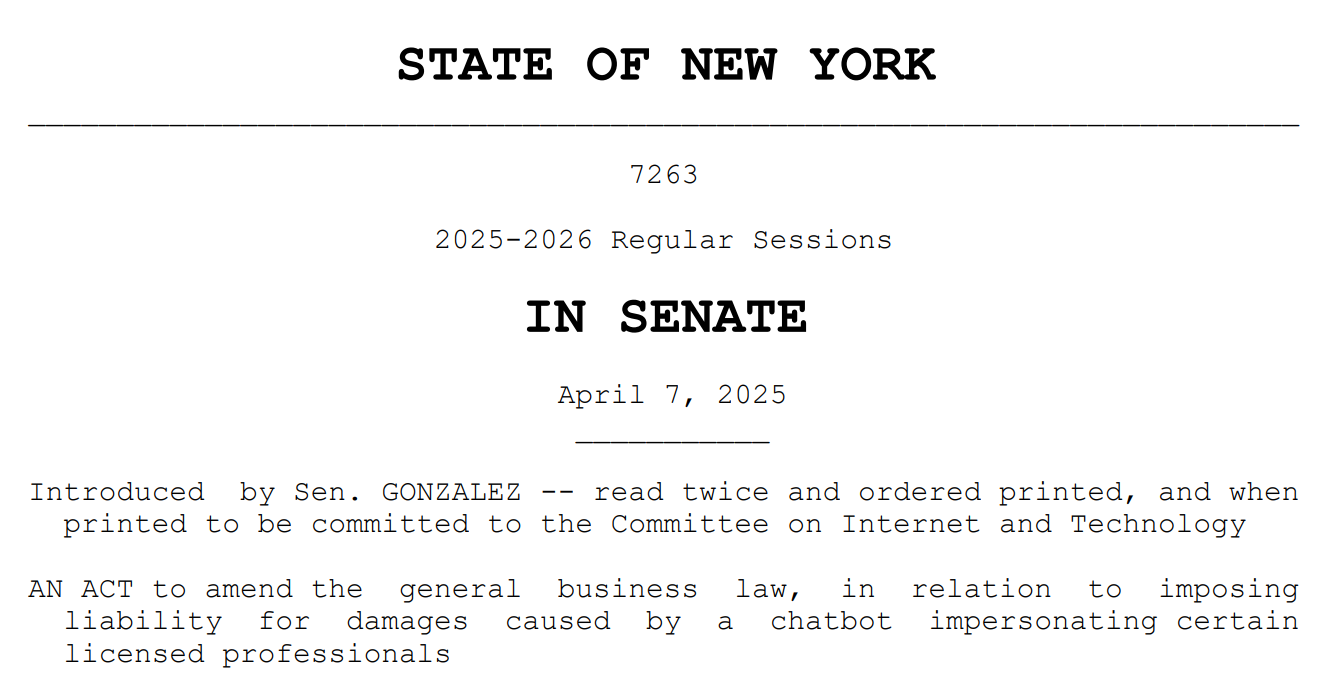
DentalGoodNews | The New York State Senate Internet and Technology Committee recently passed Bill SB S7263 with 6 votes in favor, 0 against, and 1 reserved. This bill aims to restrict artificial intelligence (AI) chatbots from providing users with professional advice in fields regulated by professional licenses, such as dentistry, medicine, and law. If found in violation of the relevant regulations, the operators of the AI could face civil lawsuits and liability for damages. The bill primarily targets AI chatbots that simulate licensed professionals. According to public information from the New York State Senate, the bill defines a "chatbot" as an artificial intelligence system, software program, or technology application capable of simulating human conversation and interaction. Based on the bill's content, if such a system simulates licensed professionals like dentists or doctors and provides information or advice (including diagnostic opinions) that could constitute unlicensed practice or conflict with relevant professional licensing regulations, it will be considered a violation. Regarding compliance obligations, the bill requires chatbot operators (including AI companies like OpenAI and Anthropic) to provide users with clear, conspicuous, and unambiguous notice that they are interacting with an artificial intelligence chatbot. However, the bill also stipulates that merely providing such notice does not constitute a defense against liability; operators remain legally responsible for the information or advice provided by the chatbot. In terms of liability determination, the bill proposes granting a private right of action to aggrieved users. If a court finds a violation occurred, the relevant party must pay actual damages; in cases of willful violation, they may also be liable for litigation costs, reasonable attorney's fees, and related expenses. The bill defines the liable parties as the owners, operators, or deployers of the chatbot, excluding third-party developers who only license the underlying technology to the operator. Regarding the scope of application, the bill covers multiple professionally licensed fields, including medicine, veterinary medicine, dentistry, physical therapy, pharmacy, nursing, podiatry, optometry, engineering, architecture, social work, psychology, mental health practitioners, and also involves the legal profession's regulatory framework. One of the backgrounds for this legislative push is recent rulings by U.S. federal courts on the application of AI call tools in medical scenarios. According to previous reports by DGN, the U.S. District Court for the Northern District of Illinois this year, in the case of Lisota v. Heartland Dental (the largest Dental Service Organization (DSO) in the U.S.) and cloud communications service provider RingCentral, initially procedurally dismissed the lawsuit on the grounds that the plaintiff "failed to adequately state a claim," allowing the plaintiff to amend and refile. In a subsequent ruling in the same case, the court, citing the "ordinary course of business" exception under the Electronic Communications Privacy Act (ECPA), ruled that RingCentral's AI call transcription and analysis service did not constitute unlawful interception. Both rulings stemmed from a lawsuit filed by a patient regarding informed consent after the dental DSO deployed AI real-time transcription and sentiment analysis tools on patient calls. According to public information from the New York State Senate, Bill SB S7263 was first introduced for legislation in April 2025 and is still in the legislative process. It has currently completed committee review and entered the Senate floor agenda stage. It still requires subsequent review and passage by the full Senate and the Assembly, followed by submission to the Governor for signature before it can officially take effect.
Article classification:
Global Dental
【GOODNEWS】 Content for industry reference only (based on public info & professional judgment); not for decision-making. Readers bear full responsibility for their own judgment and risks.
Copyright © This Platform. Unauthorized reproduction & commercial use prohibited.
Errata, contributions & cooperation: Contact customer service via WeChat:HDSW_001
|
✉️
Subscribe to Our
Newsletter
We curate important stories and exclusive insights, delivered straight to your inbox.
In-depth analysis · Exclusive content · Fast-moving news
|